
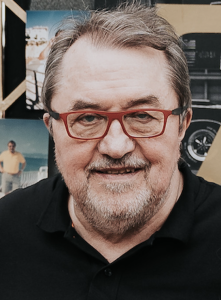

Anthony Levandowski aims to merge technology and spirituality by fostering a “spiritual connection” with artificial intelligence
Anthony Levandowski, a name synonymous with the pioneering of self-driving technology and a figure shrouded in Silicon Valley controversy, has made headlines again. This time, it’s not about groundbreaking tech advancements or legal battles, but something far more unorthodox: the resurrection of his AI-centric church, “Way of the Future.”
The church was originally launched in 2015, while Levandowski, while working on Google’s self-driving project Waymo. It was an ambitious endeavor, aiming to merge technology and spirituality by fostering a “spiritual connection” with AI. Despite its closure a few years later, Levandowski’s renewed venture, as discussed on Bloomberg’s AI IRL podcast, has already attracted a “couple thousand people,” Bloomberg reports.
“How does a person in rural America relate to this? What does this mean for their job?” he said. “Way of the Future is a mechanism for them to understand and participate and shape the public discourse as to how we think technology should be built to improve you.”
The existence of the church became public knowledge in 2017 via Wired, years before ChatGPT brought AI into the mainstream conversation.
Levandowski’s idea raised eyebrows, both because of the church’s focus on “the realization, acceptance, and worship of a Godhead based on Artificial Intelligence developed through computer hardware and software,” and because of Levandowski himself. At the time, he was at the center of a high-profile legal battle related to the theft of trade secrets, sentenced to 18 months in prison, then pardoned by former President Donald Trump. -Bloomberg
According to Levandowski, more sophisticated AI systems could help guide humans with moral, ethical or existential questions.
“Here we’re actually creating things that can see everything, be everywhere, know everything, and maybe help us and guide us in a way that normally you would call God,” he said.
Vivek Ramaswamy joins The Alex Jones Show to talk about the populist movement making its way around the globe.