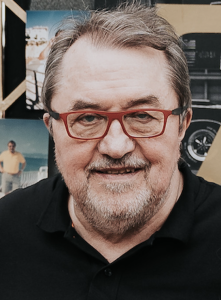

A veteran who fought for Nazi Germany and was recently celebrated in Canada’s parliament was given a medal.
Ternopol Region in western Ukraine announced on Tuesday that it had decorated Yaroslav Hunka, the World War II Nazi soldier once cheered by lawmakers in Ottawa. The medal was presented on Hunka’s 99th birthday to his great-niece.
Hunka served in the 14th Waffen SS division, which was made up of Ukrainian volunteers and was responsible for atrocities against Poles, Jews, and the Soviet resistance.
Ternopol official Oleg Sirotyuk handed the ‘Yaroslav Stetsko’ medal for service to Hunka’s relative, Olga Vitkovska, with the expectation that she will eventually present it to her great-uncle in Canada.
The regional council had voted to give Hunka the medal on February 6, citing his “significant personal contribution to the provision of assistance to the Armed Forces of Ukraine, active charity and public activity,” according to a document quoted by the Ukrainian outlet Suspilne.
A week after that, Canada refused Russia’s request to extradite Hunka, who has been charged with genocide for his role in World War II.
Read more Ukraine arrests priest for branding ‘Azov’ Nazis
Hunka was a guest of honor at the Canadian Parliament last September, during the visit by Ukrainian President Vladimir Zelensky. Then-speaker Anthony Rota introduced him as “a Canadian hero” who “fought for Ukrainian independence against the Russians,” after which Hunka received two standing ovations.
Multiple Jewish groups, as well as Russia, Poland, and the UN, condemned the incident. Canadian Prime Minister Justin Trudeau deflected blame for the affair onto Rota, who had to resign.
About a month after the incident, Moscow charged Hunka with genocide and issued a warrant for his arrest. Russian diplomats have pointed to the incident as proof of “strong influence” of neo-Nazi ideology in Canada.
Ternopol Region is part of Galicia, the historical province that the 14th Waffen-SS division was named after. It had previously been ruled by Poland and Austria-Hungary.
Yaroslav Stetsko was a senior member of the Organization of Ukrainian Nationalists (OUN-B) led by Stepan Bandera, who collaborated with the Nazis during the early stages of the German invasion of the Soviet Union.
Stetsko was the head of Bandera’s Nazi-aligned ‘Ukrainian National Government’, proclaimed on June 30, 1941 in German-occupied Lviv. Adolf Hitler, however, refused to recognize the OUN-B government and had its members arrested.
After the war, Stetsko fled to the West and became the leader of OUN-B, as well as a prominent anti-Communist activist. In 1983, he was received at the White House and honored as the “last premier of a free Ukrainian State,” in the words of then-President Ronald Reagan.
Economist Warns Rollout Of The Mark Of The Beast Being Prepared By Central Bank